
Quick Flat Roof Patch vs Full Replacement Cost Analysis
If you’ve noticed a water stain on your ceiling or seen dark streaks running down the exterior of your building-especially after a heavy rain in the Casa Linda area-your immediate thought is probably: How much will this cost to fix? That anxiety about finding a leak and dealing with the repair bill is completely normal. It’s frustrating, it’s stressful, and it can feel overwhelming when you don’t know where to start.
When dealing with low-slope roofs (flat roofs), the situation can be more complex than just plugging a hole. I started working on roofs years ago after helping my grandfather restore his ranch house in the Hill Country, and what I learned early was that good roofing is always about foundations, not just visible shingles. And when it comes to flat roofs, the initial leak you see-the drip or the stain-is rarely the whole story.
My core expertise, and what I want to share with every homeowner here in Casa Linda, is this: The initial leak is just the symptom; the true cost is the secondary damage. That means mold remediation, structural compromise inside your walls, and internal water staining that can multiply the repair bill far beyond what you initially expected. Flat roofs are uniquely prone to failure due to drainage issues, material degradation, and simply aging membranes (like TPO or Modified Bitumen). Because of this complexity, it’s essential we look past the immediate drip and conduct a thorough quick flat roof patch vs full replacement cost analysis to ensure your peace of mind and maximize your long-term structural value.
The Quick Fix vs. Long-Term Stability: Evaluating Temporary Patches
When you first notice water evidence, the natural impulse is to find the quickest, cheapest solution. This leads many homeowners to consider a "quick flat roof patch."
What Exactly is a Patch?
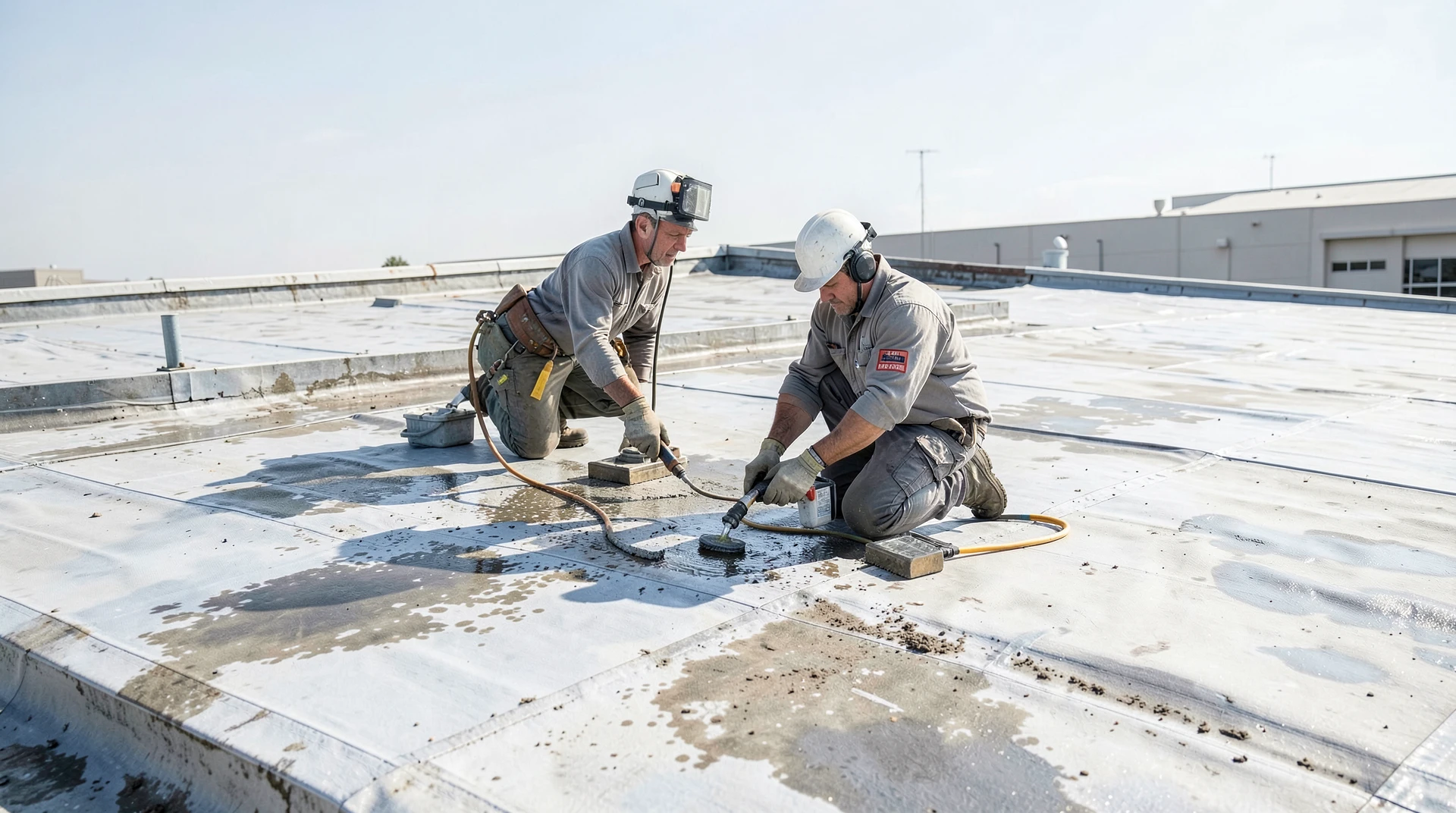
A quick flat roof patch typically involves spot sealing or applying temporary patches directly onto an existing membrane (like TPO or modified bitumen). For a minor, isolated puncture that occurred due to debris, this can be a necessary and appropriate short-term measure for immediate leak mitigation. It stops the water right now.
The Limitations of Patching
However, it is vital that you understand what patching does not address. Patches are effective at addressing symptoms, but they never fix the fundamental causes of failure. They are essentially Band-Aids.
The problem with low-slope roofing membranes is that their failures are often systemic-they might be failing because of chronic pooling water in one area, or because the underlying material has reached the end of its structural life due to decades of UV exposure and temperature swings. A patch only covers the spot where the failure happened; it doesn't restore the integrity of the surrounding membrane that is weakening.
The 'Patchwork Tax': Why Repeated Patches Cost More
This brings us to what I call "The Patchwork Tax." While a patch seems incredibly cheaper upfront, you must calculate the total cost of ownership (TCO). Every time we apply a patch-and eventually, every flat roof needs more than one or two patches over its lifetime-it requires another inspection, another crew visit, and another assessment.
Over several years, this accumulated effort leads to unforeseen cumulative costs. The constant process of patching means the underlying issues are never fully corrected; they are merely delayed. This superficial fix often only delays the inevitable major failure, which ultimately increases your risk profile significantly.
Why Full Replacement is Often the Most Cost-Effective Investment
When we talk about "cost," we need to shift our perspective from viewing it as a simple expense to seeing it as a long-term investment in property value and structural safety. A full replacement removes all compromised materials, addressing systemic weaknesses rather than just covering up visible failures.
The Benefits of Comprehensive Replacement
A professional, full roof replacement involves stripping away the entire aging system down to the decking (the foundational material), preparing it thoroughly, and installing a brand-new, uniform membrane. This process yields several major benefits:
- Guaranteed Longevity: Using high-quality materials like modern TPO or specified modified bitumen ensures guaranteed longevity that far exceeds what can be achieved by patchwork.
- Uniformity and Resilience: A new roof is uniform across its entire surface, meaning there are no weak points or areas of differing material strength. This uniformity is critical when dealing with severe Texas weather events like hailstorms or high winds.
- Opportunity to Upgrade: Full replacement allows us the opportunity to upgrade materials-perhaps selecting a more reflective membrane for improved energy efficiency, which can actually reduce your cooling costs over time and recoup some of that initial investment.
Understanding Modern Materials vs. Aging Systems
Modern roofing materials are designed with current building science in mind. For example, today's specialized TPO membranes offer superior impact resistance compared to older systems just receiving a patch job. If the underlying system is weak-if we only treat it like an expensive bandage-it simply won't withstand the next major weather cycle, regardless of how good the temporary patch was.
I remember working on a commercial property in Casa Linda where the roof had been patched three different times over five years by various contractors. The structure underneath was fatigued and unable to handle the stress of just one more season; a full Casa Linda, TX Roof Replacement, though costly upfront, saved them from an estimated $40,000+ in structural damage they would have incurred within two years.
The Cost Analysis: Quick Flat Roof Patch vs Full Replacement
This section is the heart of your question, and it requires a clear, objective framework. When should you use a patch? And when must you consider full replacement?
Setting the Decision Threshold
A quick patch is appropriate only for immediate, temporary stabilization-think of an isolated puncture that needs sealing before the next rain hits, while we schedule the comprehensive inspection and quote.
However, professional experience dictates that replacement becomes necessary when:
- More than 15-20% of the roof surface shows signs of failure (visible cracking, blistering, or granule loss).
- Multiple patches are required in a single year to address different areas-this is a major red flag.
- The existing membrane material has passed its expected service life regardless of how clean it looks.
The True Cost Calculation: Beyond the Material Price
When we conduct a proper quick flat roof patch vs full replacement cost analysis, I always guide homeowners to focus on the true cost. The money saved by opting for a cheap, quick patch upfront is often dwarfed-and sometimes completely eclipsed-by the costs of secondary damage.
I’ve seen it dozens of times: The initial leak leads to damaged drywall and mold remediation inside your home (a major expense). Then, water pooling compromises the structural metal decking underneath the roof (an even bigger expense). These are not repairable with a patch; they require professional intervention that only happens when the whole system is removed and rebuilt.
The final cost decision depends on several key variables: the actual age of the structure, the condition of the underlying materials (like the metal decking), the drainage capacity of the building, and the level of warranty you desire. This complexity is why an initial, detailed inspection is absolutely critical. It prevents scope creep-that dreaded surprise bill that comes from contractors guessing at the problem depth.
Planning for Prevention: Making Your Roof Last Through Tough Texas Seasons
Ultimately, dealing with a roof leak is not just about fixing what's broken; it’s about planning how to keep your home protected through the next series of severe Texas seasons. We want to move you from a reactive state (fixing leaks) to a proactive one (preventing failure).
Warning Signs That Demand Attention

Even if there are no visible drips today, certain signs should prompt an immediate call to action:
- Chronic Pooling Water: Any area where water seems to sit or pool for long periods is stressing the membrane and requires professional grading/drainage review.
- Unusual Staining Patterns: If stains are following lines (like vents or pipes) rather than being random, it often indicates a systemic drainage issue that patches cannot solve.
- Material Fatigue: Simply knowing that your roof has exceeded its expected lifespan-even if it looks fine-means the material integrity is compromised and needs replacement planning.
Navigating Warranties and Insurance
One of the most confusing parts of home ownership in Texas is understanding who pays for what after a major storm. It's crucial to understand the difference between your homeowner’s insurance coverage (which typically covers damage from wind/hail) versus the material manufacturer's warranty (which covers material failure over time). Knowing this upfront prevents massive disagreements and ensures you are protected when disaster strikes.
Whether we are discussing a small, highly localized repair near Casa Linda or planning a complete overhaul of your roofing system, remember that the first step is always an honest, detailed assessment. We treat every job like it's our own-a clean job site, a reliable Roof Coatings in Casa Linda, TX process, and nothing left behind but a solid roof built to handle the unique demands of central Texas weather.
If you are worried about water stains, or if you just need clarity on whether patching is enough for your low-slope membrane, please don’t wait until the drip gets worse. Give us a quick call at +1 469-589-3827 for an honest assessment and let's talk about giving your home true peace of mind.